
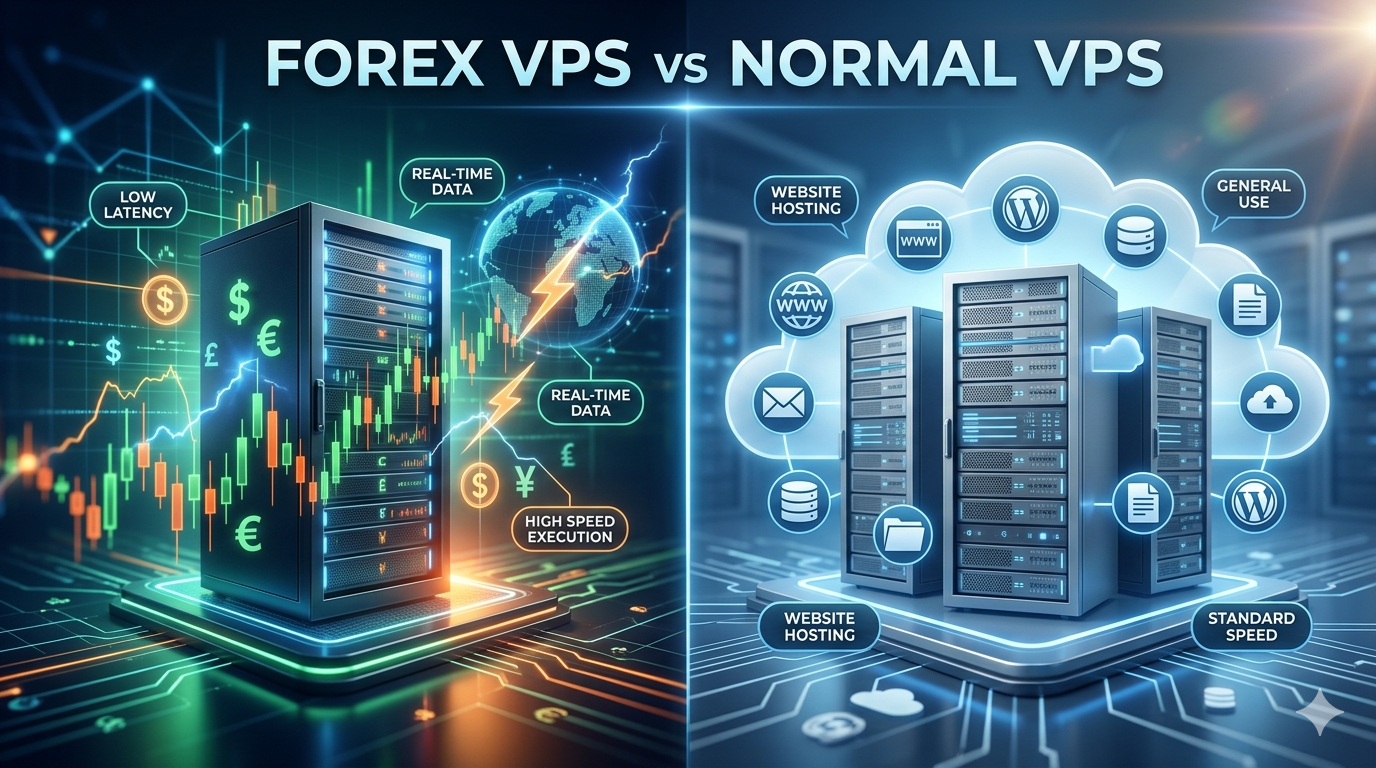
When choosing a VPS for your online activities, especially trading, understanding the difference between a Forex VPS and a Normal VPS is critical. While both are virtual private servers, they serve very different purposes—and choosing the wrong one can cost you performance, profits, and reliability.
If you’re new to trading servers, you may want to first read our guide on What is a Forex VPS to understand the basics before comparing options.
What is a Forex VPS?
A Forex VPS is a specialized virtual server optimized specifically for running trading platforms like MetaTrader 4 (MT4) and MetaTrader 5 (MT5).
Key Features of a Forex VPS:
- Ultra-low latency to broker servers
- 24/7 uptime for uninterrupted trading
- Optimized for trading bots (Expert Advisors)
- High-speed SSD or NVMe storage
- Stable network with minimal downtime
Forex VPS hosting is designed to ensure your trades execute instantly, without delays or interruptions. You can explore our Forex VPS plans to see how performance differs from standard servers.
What is a Normal VPS?
A Normal VPS is a general-purpose virtual server used for hosting websites, applications, or running software.
Common Uses:
- Web hosting
- App development
- Game servers
- Remote desktops
- Data storage
If you’re only hosting a website or app, a standard VPS may be enough—but for trading, performance differences matter. You can compare this further in our Best VPS for MT4 guide.
Forex VPS vs Normal VPS: Key Differences
1. Latency and Speed
- Forex VPS: Located near broker data centers → ultra-low latency (1ms–5ms)
- Normal VPS: No optimization → higher latency (20ms+)
Low latency is critical for execution speed. Learn more about this in our low latency VPS for trading article.
2. Reliability and Uptime
- Forex VPS: Designed for 24/7 trading uptime (99.99%)
- Normal VPS: May not prioritize continuous uptime
Downtime can interrupt your strategies. Our uptime guarantee and infrastructure page explains how we minimize this risk.
3. Performance Optimization
- Forex VPS: Tuned for MT4/MT5 and trading bots
- Normal VPS: General-purpose, no trading optimization
If you use Expert Advisors, check our guide on running MT4/MT5 bots on VPS for best practices.
4. Server Location
- Forex VPS: Strategically placed near major brokers
- Normal VPS: Random or user-selected locations
Our server locations page shows where our Forex VPS nodes are deployed for optimal speed.
5. Security and Stability
- Forex VPS: Stable environment for automated trading
- Normal VPS: May run multiple workloads → potential instability
For traders, stability is everything. Read more in our secure VPS hosting for traders guide.
Why Forex Traders Should Avoid Normal VPS
Using a normal VPS for trading might seem cheaper, but it comes with hidden risks:
- Slippage due to latency
- Missed trades during downtime
- Bot interruptions
- Inconsistent execution speeds
If you’re serious about trading, upgrading to a dedicated Forex VPS solution is a smart move.
When is a Normal VPS Enough?
A normal VPS might work if:
- You trade manually (not 24/7)
- You don’t use bots or EAs
- You don’t rely on ultra-fast execution
Otherwise, it’s better to choose a solution designed specifically for trading.
Benefits of Using a Forex VPS
- Faster trade execution
- Continuous operation (even when your PC is off)
- Reduced slippage
- Better stability for trading bots
- Professional-grade trading environment
You can compare features and pricing on our Forex VPS plans page.
Forex VPS vs Normal VPS: Final Verdict
If you’re serious about trading, especially using automation, the choice is clear:
👉 Forex VPS = Performance, reliability, profit optimization
👉 Normal VPS = General use, not trading-focused
Why Choose MarginVPS?
At MarginVPS, we provide:
- Ultra-low latency connections to major brokers
- 99.99% uptime guarantee
- High-performance infrastructure
- Affordable plans tailored for traders
👉 Get started with our Forex VPS hosting plans today and improve your trading performance.
Conclusion
Choosing between a Forex VPS and a Normal VPS is not just a technical decision—it’s a financial one. If you want consistent execution, minimal delays, and maximum uptime, a Forex VPS is essential.
To go deeper, check out: